 EN
EN AR
AR HI
HI ES
ES FR
FR DE
DE


Leadership Under Fire
Are We Unfairly Painting Everyone With The Same Brush? Asks Bobbi Hartshorne of BeWellWise
The digital arena roars with discontent, casting leadership in a harsh light. Social media narratives, fuelled by personal accounts, reveal a stark disconnect between executive perception and employee experience. While individual leaders may feel unjustly targeted, the sheer volume of criticism demands a critical examination.
Data Speaks: Quantifying the Trust Deficit
The data reveals a troubling reality. Gallup's findings show a mere 21% of U.S. employees strongly trust their leadership, while PwC's 2024 Trust Survey highlights an 18-point gap between executive and employee perceptions of trust.
This raises a crucial question: Is neglect or ignorance any more excusable than intentionally establishing systems that adversely affect employees?
If the outcome is negative for both individuals and the business, whether through conscious malice or unconscious oversight, the consequences are the same. In a climate where trust is already fragile, the impact of such oversights can be profound.
Intent vs. Impact: The Accountability Dilemma
Leaders often operate with good intentions, but unfortunately, good intentions do not negate negative outcomes. To ignore the systemic nature of the problem, to assume one's organization is immune, is a dangerous form of self-deception. When the data consistently points to a widespread crisis of trust, leaders must confront the possibility that they are contributing to the problem, even unintentionally.
Beyond Good Intentions: Demanding Measurable Accountability
Just as a sales executive is held accountable for consistently meeting sales targets, leaders bear an equivalent responsibility for the performance of their teams and the overall health of their organization. The principle, 'With great power comes great responsibility,' is not a mere adage; it's a fundamental expectation.
Leaders are compensated for their ability to guide, inspire, and deliver results. However, a growing sentiment among the workforce is that leadership accountability often lags that of other roles and yet leadership missteps are often further reaching and with more significant consequences.
The Ripple Effect: Public Scrutiny and Organizational Impact
When leadership missteps, whether through intentional decisions or unintentional oversights, the impact ripples through the organization, affecting employee health and morale, productivity, and ultimately, the bottom line. In an age of heightened transparency and social media scrutiny, these missteps are no longer confined to private internal discussions; they become public narratives, amplifying the call for greater accountability. This isn't just about business performance; it's about upholding fundamental principles of equity and justice in the workplace.
How, then, can leaders avoid being swept away by this tide of discontent? How can they assert themselves as beacons of positive leadership?
A Leader's Self-Assessment: Bridging the Perception Gap
To help leaders gauge their current position and identify areas for improvement, consider these questions. If you cannot answer them accurately and confidently, it's time to seek deeper understanding from those around you. Ignorance is no longer an acceptable excuse for failure.
Transparency: Can you articulate specific instances where you have shared challenging information with your team, even when it was difficult?
Empathy: Can you provide concrete examples of how you have actively listened to and acted upon employee feedback in the last quarter and assessed if the change has been effective?
Ethical Decision-Making: Can you outline the ethical frameworks you use to guide your decisions, and how you ensure they are consistently applied?
Accountability: How do you measure and demonstrate your accountability for the impact of your decisions on employees and the organization?
Continuous Learning: What are three specific actions you have taken in the last six months to enhance your leadership skills and understanding of employee needs?
Employee Perception: How confident are you that your perception of the company culture aligns with the actual experience of your employees? What data supports this confidence?
Impact awareness: Can you provide examples of when you have reversed or changed a policy or procedure based on employee feedback about negative impacts?
Building Trust, Driving Change: A Call to Action
By embracing these principles, leaders can begin to rebuild trust and create a more positive and productive work environment. They can demonstrate that they are not simply reacting to the tide of discontent but actively shaping a better future for their organizations and their employees.
While broad criticism of leadership can feel unjust, it often serves as a necessary impetus for change. The key question is not about individual intent, but about a leader's willingness to acknowledge and address systemic problems with tangible actions. Neither neglect nor ignorance excuses inaction. Where there's a perceived absence of fairness and accountability, communities will find ways to impose their own sense of order, and they now have more tools than ever to do that at speed, reaching large audiences in a matter of minutes turning a peaceful day at the office into an unexpected (but possibly inevitable) reputational crisis.
Related Posts

Manipal Academy Committed to Addressing Market Trends In The Workplace
Manipal Academy of Higher Education (MAHE) Dubai proudly announces the launch of its groundbreaking ...

Are Leaderships Traits Geographically Neutral?
Let us take just one of them and see… ‘’ I was courageous last week Paula; I submitte...

Globally Acclaimed SHINE Programme Launches in the GCC to Empower Female Leaders
SHINE, an internationally recognised female leadership and empowerment programme created by RoundTab...

Why We Should Share What We Learn
I know of many reasons why sharing , putting that knowledge and experience out into the public domai...

Key Consequences of Candid, Convivial, Compassionate, Conscious and Compelling Conversations
Candid, convivial, compassionate, conscious and compelling conversations enrich the relationships e...

Emotional Intelligence Reaches The Arab Speaking Market
Six Seconds comes closer to reaching its target of bringing Emotional Intelligence to 1 Billion Peop...

New Case Study: The Business Case for Emotional Intelligence
Leaders need to rebuild post-COVID at the same time they face more complexity, uncertainty and chang...

250 Graduates of UAE Government Leaders Programme Honoured
His Highness Sheikh Mohammed bin Rashid Al Maktoum, Vice President and Prime Minister of the UAE and...
Learning Rewired
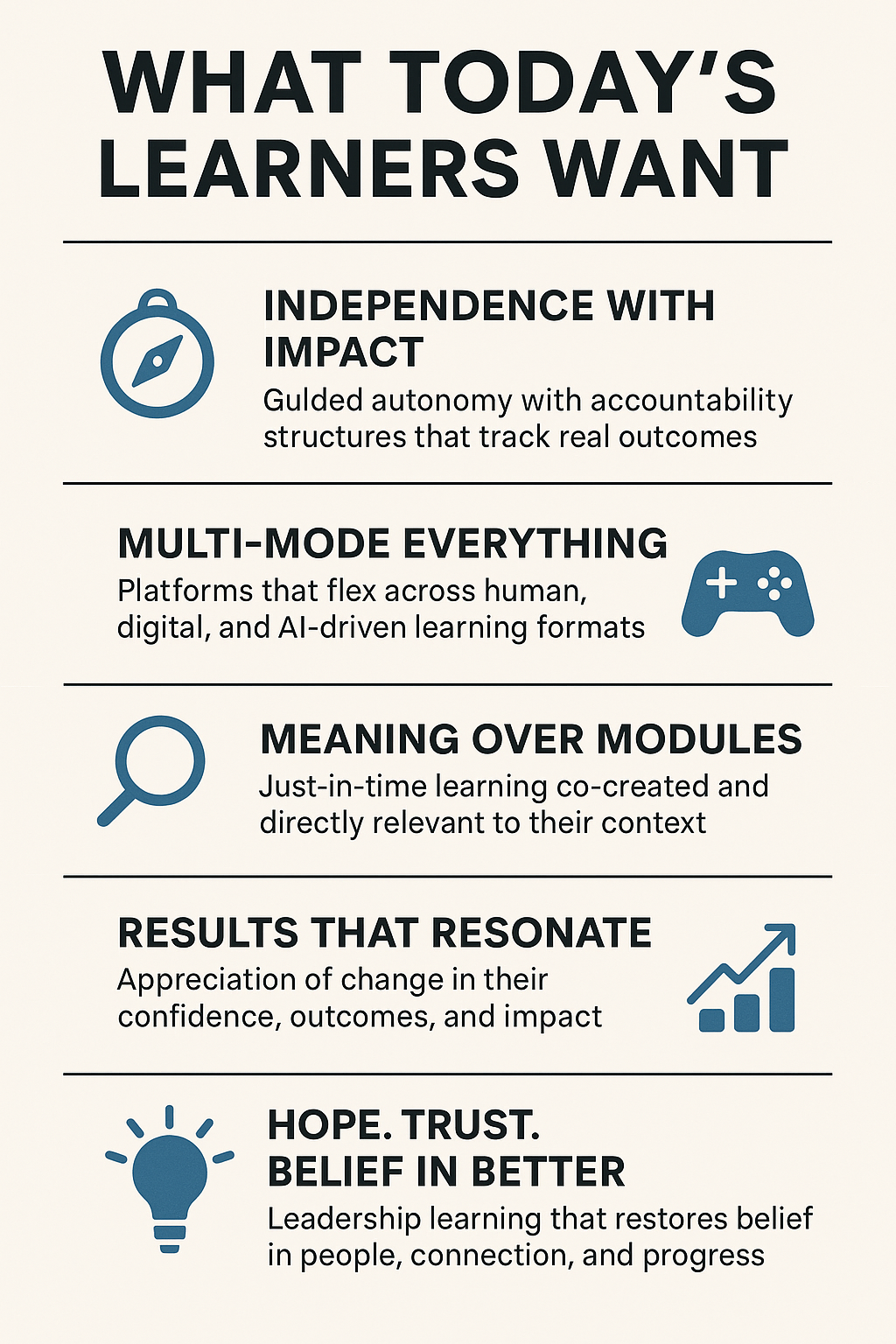
Today’s learners aren’t waiting to be taught. They are demanding relevance, choice and r...

UAE Commits to Shaping a Better Future for Societies
The UAE is committed to playing an active role in the international efforts to shape a better future...
