 EN
EN AR
AR HI
HI ES
ES FR
FR DE
DE

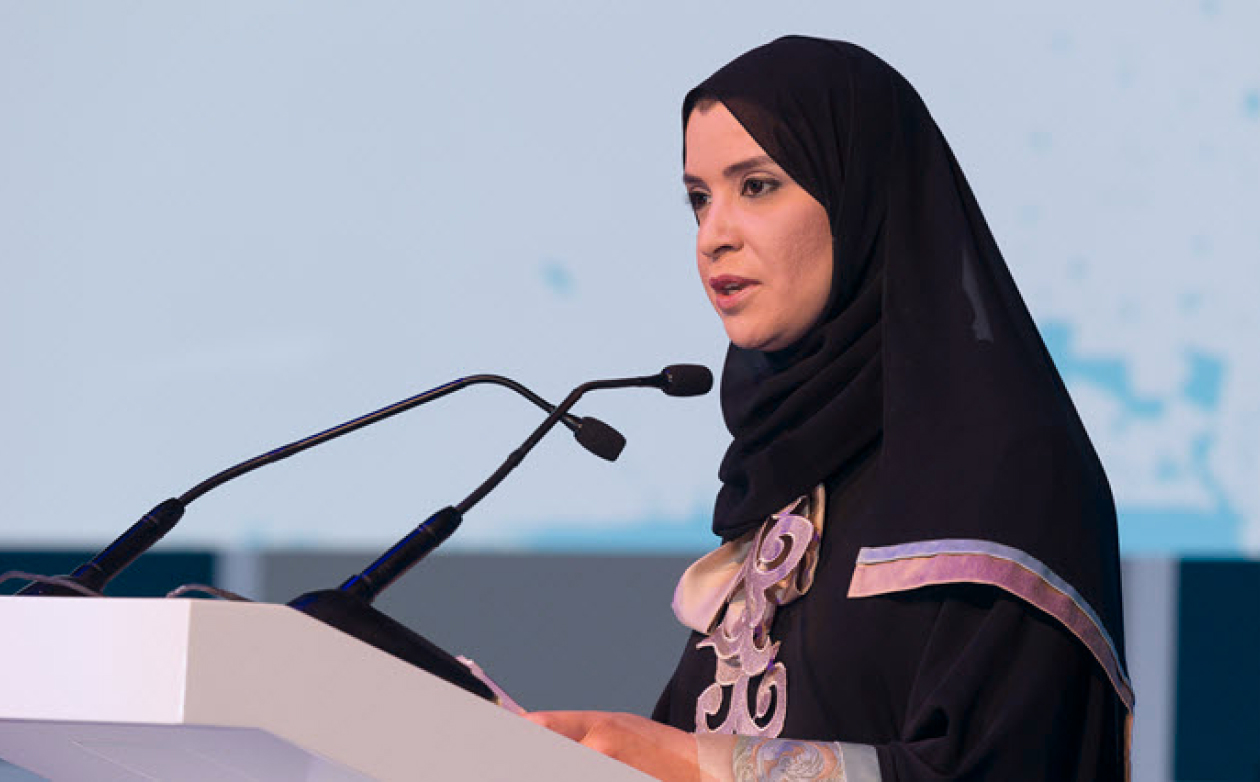
The Rise of Emirati Women in Business: Leading Under Commercial and Cultural Pressure
Women account for 66% of the UAE Government workforce
The rise of Emirati women in business is not just a social milestone - it is one of the UAE’s most underappreciated competitive advantages. Too often, discussions about women in leadership remain trapped in the language of inclusion and representation. The reality is more compelling: Emirati women are excelling under uniquely intense cultural and commercial pressures, and in doing so, they are pioneering a style of leadership that businesses across the Middle East - and beyond - would do well to emulate.
The numbers tell a powerful story. Women now account for 66% of the UAE government workforce and hold an extraordinary 75% of leadership roles in government entities - one of the highest rates of female public-sector leadership anywhere in the world. In the private sector, Emirati women occupy 15% of board seats in listed companies, double the figure just five years ago. These figures put the UAE ahead of countries such as Japan (10%) and close to Singapore (16%), underlining how quickly progress has accelerated.
But the statistics only scratch the surface. What makes Emirati women leaders remarkable is not simply their growing presence, but the way they operate under a dual spotlight: cultural expectations at home and commercial scrutiny in the boardroom. Every success is amplified as a win for Emirati progress. Every setback risks being interpreted as a collective step backwards. This is leadership at high altitude - where cultural integrity must be preserved while global competitiveness is demanded.
Pressure as a catalyst, Not a constraint
Conventional leadership models tend to treat cultural context as a constraint to be managed. Emirati women leaders flip that logic on its head. By using cultural intelligence as a strategic tool, they are able to manage diverse stakeholders, balance tradition with transformation, and deliver results without sacrificing authenticity.
This is not theory - it is a daily reality in a country where business meetings can involve stakeholders from 20 nationalities, and where local heritage must coexist with global practice. Far from holding them back, Emirati women’s deep cultural grounding gives them a natural advantage in building trust, creating consensus, and navigating complexity.
Five leadership lessons from Emirati women
From this lived experience emerge five strategies that regional and global businesses should pay attention to:
- Perspective management: They balance the urgent demands of quarterly performance with the long-term reputational weight of cultural expectations. That dual-lens thinking produces decisions that are both commercially sound and socially sustainable.
- Emotional regulation: Leading under scrutiny requires composure. Emirati women leaders cultivate resilience, acting as emotional anchors for their teams in environments where stress levels can derail performance.
- Communication across boundaries: Multilingual and culturally fluent, they switch easily between directness and diplomacy, ensuring clarity while respecting norms across diverse audiences.
- Innovation through evolution: Instead of chasing disruption for its own sake, Emirati women build change on continuity - an approach that secures faster adoption and reduces resistance.
- Mentorship and legacy building: Their leadership is generational. With 56% of UAE university graduates and 61% of STEM graduates now women, Emirati leaders are creating ecosystems of mentorship to ensure that the next generation of talent rises with them.
These are not just “soft skills”. They are hard-edged competitive capabilities, directly linked to organisational resilience, customer loyalty, and long-term growth.
The commercial dividend
Organisations led or influenced by Emirati women are demonstrating higher cohesion, lower resistance to change, and stronger loyalty. This resilience is not abstract - it translates into bottom-line performance. In markets where volatility is the norm, leaders who can blend cultural authenticity with commercial execution are the ones who build companies that last.
Consider the example of the LEAP Graduate Trainee Program, run by Emirates Global Aluminium in partnership with Ignite Training. Designed to prepare the next generation of Emirati leaders, female participants in particular are thriving, precisely because the program acknowledges - and equips them to manage - the dual pressures of cultural and commercial leadership. This is more than training; it is a model of how inclusive, context-sensitive leadership development can align with national economic goals.
A regional and global model
What is happening in the UAE has global relevance. In international negotiations, Emirati women leaders act as cultural translators - bridging local tradition with international norms. Their emphasis on relationship-building over transactional deals aligns perfectly with the UAE’s long-term economic diplomacy.
As UAE businesses expand abroad, Emirati women are becoming not only leaders at home but ambassadors of a distinctive leadership model abroad: One that merges values with vision. Their rise challenges the outdated binary of ‘modernisation versus tradition’ by showing that tradition, when intelligently applied, can be a source of strategic strength.
The takeaway for business leaders
The lesson for business leaders across the Middle East and beyond is clear: What once looked like a constraint is now a competitive advantage. Emirati women are showing how to lead under pressure by turning cultural expectation into strategic value.
For companies, this means two things. First, inclusive leadership development is not a ‘nice to have’ - it is a direct driver of resilience and performance. Second, the strategies forged by Emirati women leaders under dual pressure are not just relevant to gender diversity. They are relevant to anyone seeking to lead in an increasingly complex, multicultural business environment.
As the UAE continues its rapid diversification and global expansion, the women reshaping its leadership landscape are providing something even more valuable than representation. They are offering a playbook for sustainable leadership in the 21st century. And it is time the business world started paying attention.
Author: Ben Edwards linkedin.com/in/benjaminjedwards85
Head of Training, Ignite
Related Posts

Believe It….Or Not!
Coaching Discoveries: An examination of Disempowering Belief Systems I Think! “I think whateve...

Unlocking Potential Beyond the Ordinary
Leadership is changing. For decades, we’ve been told that leadership is about strategies, fram...

Update on Leadership
“Leadership” is an oft quoted but usually misunderstood cliché. It is meant to aw...

Popular Management Advice – FLIP SIDE
Management gurus provide much needed food for thought. It is also their belief. Their success provid...
CIM-Meirc Partnership to Empower Marketers Across the GCC with Global Best Practices
The Chartered Institute of Marketing (CIM) and Meirc Training and Consulting have formed a first-of-...

2023 A Violet Year – THE CALL TO LEADERSHIP
More and more frequently we see headline posts, be it in-house e-zines, newsletters, linked-in or so...

Does Trust Matter?
Does trust matter? Has anyone broken your trust? How do you warn others about this? WARNING!!! th...

250 Graduates of UAE Government Leaders Programme Honoured
His Highness Sheikh Mohammed bin Rashid Al Maktoum, Vice President and Prime Minister of the UAE and...

Oman Strengthens the Presence of Women in Leadership
This strategic leadership appointment underscores the company’s ongoing commitment to cultivat...

The Nine Essential Pursuits Of Wise Leaders
I’ve had the great honour and privilege since 1990 to be in the room with more than a million ...
