 EN
EN AR
AR HI
HI ES
ES FR
FR DE
DE


The Future of Skills and Learning in a Rapidly Transforming Investment Industry
CFA Institute, the global association of investment professionals, recently released the fourth report in its Future of Work series, exploring the Context, Culture, and Content of Work in the investment industry.
Advancing technologies and hybrid working continue to change the shape of careers in finance. The Future of Work in Investment Management: The Future of Skills and Learning draws on CFA Institute survey data to identify the skills and learning equation for building talent and careers in a rapidly transforming investment industry. The report highlights current gaps between the supply and demand for skills in the investment industry, examines learning trends, and proposes changes to investment teams to better leverage diverse talent and the combined power of discrete but complementary skills.
The complete four-part Future of Work series draws from responses from a combined group of more than 11,000 investment professionals globally across three surveys. The series also draws on survey input from leaders at 41 investment organizations representing more than 230,000 employees. In addition, more than 100 investment professionals and human resources professionals in the investment management industry provided qualitative input through virtual roundtables in the following markets: the United Arab Emirates, the United Kingdom, the United States, Australia, Canada, China, India, Japan, Malaysia, Singapore, South Africa, Switzerland, and Uruguay.
Fewer than half of survey respondents receive support from employers to develop the new skills they need. Artificial Intelligence (AI), machine learning, decentralized finance, and sustainability currently present some of the largest gaps between interest in learning and supply of expertise. Chief Investment Officers and those in fintech/IT, trading, sales, and accountancy positions have the highest expectation of significant change to their roles.
William Tohme, Senior Regional Head, Middle East and North Africa at CFA Institute, said: “In a dynamic and ever-changing environment, we need to reevaluate and reassess how organizations function continuously. With a vast focus on continuous development programs, investment companies need to revisit their talent devolvement programs to seek and retain the best talent in this competitive sector.
By taking the opportunity to invest in professional development, employees can always be up to date with not only new technological advancements slowly arising in the industry but also the soft skills needed in people’s everyday jobs like negotiating and persuading, which have become more prevalent in the new world of work.
Key Findings:
- The impact of new analytical methods on roles: More than a third of CFA Institute members surveyed believe the role they perform will be substantially different in 5-10 years’ time, and the biggest disruptive factor will be new analytical methods, including AI and machine learning.
- The skills pathway: Technical skills are most important at career entry, with soft skills, leadership skills, and T-shaped skills (a combination of deep knowledge in a single domain and wider knowledge in other fields and the ability to connect them) growing in importance over time.
- The skills in high demand: New sources of data will affect the skills needed for investment decision-making. The skills mentioned most by investment professionals include a foundational understanding of AI and machine learning, as well as knowledge of sustainability issues. The most important soft-skill category is influencing, persuading, and negotiating. Other skills that have become more important in the new world of work include time management, direct communication, and being more resourceful. Managers and leaders will need to adapt their skillsets to succeed in a more flexible and dispersed work environment.
- Skills availability and areas for development: Investment professionals are interested in new skills but are time constrained. Of 16 trending skills areas, notable differences between “saying and doing” are evident. For AI, for every person pursuing the skill, three others intend to do so. Currently some 20 percent of respondents say they are pursuing learning in AI and machine learning, indicating how much respondents anticipate AI will change the investing landscape. Sustainability and data visualization have seen the highest overall increase in interest levels over the previous two-year period.
- The talent factors: Employers seek a combination of skills, grit, and experience.
To access The Future of Work in Investment Management: The Future of Skills and Learning, visit [link].
William T
Related Posts

The Future of Customer Care
A simple enough combination of two words. Customer. Service. Yet what it involves / includes / encom...

Sales: Unwrapping the “Black Box”
Between the setting of targets and the achievement of goals sits a black box, unopened. Effective un...

Cognita Expands its School Footprint in the Region
This milestone strengthens Cognita’s presence in the region and reaffirms its commitment to ac...
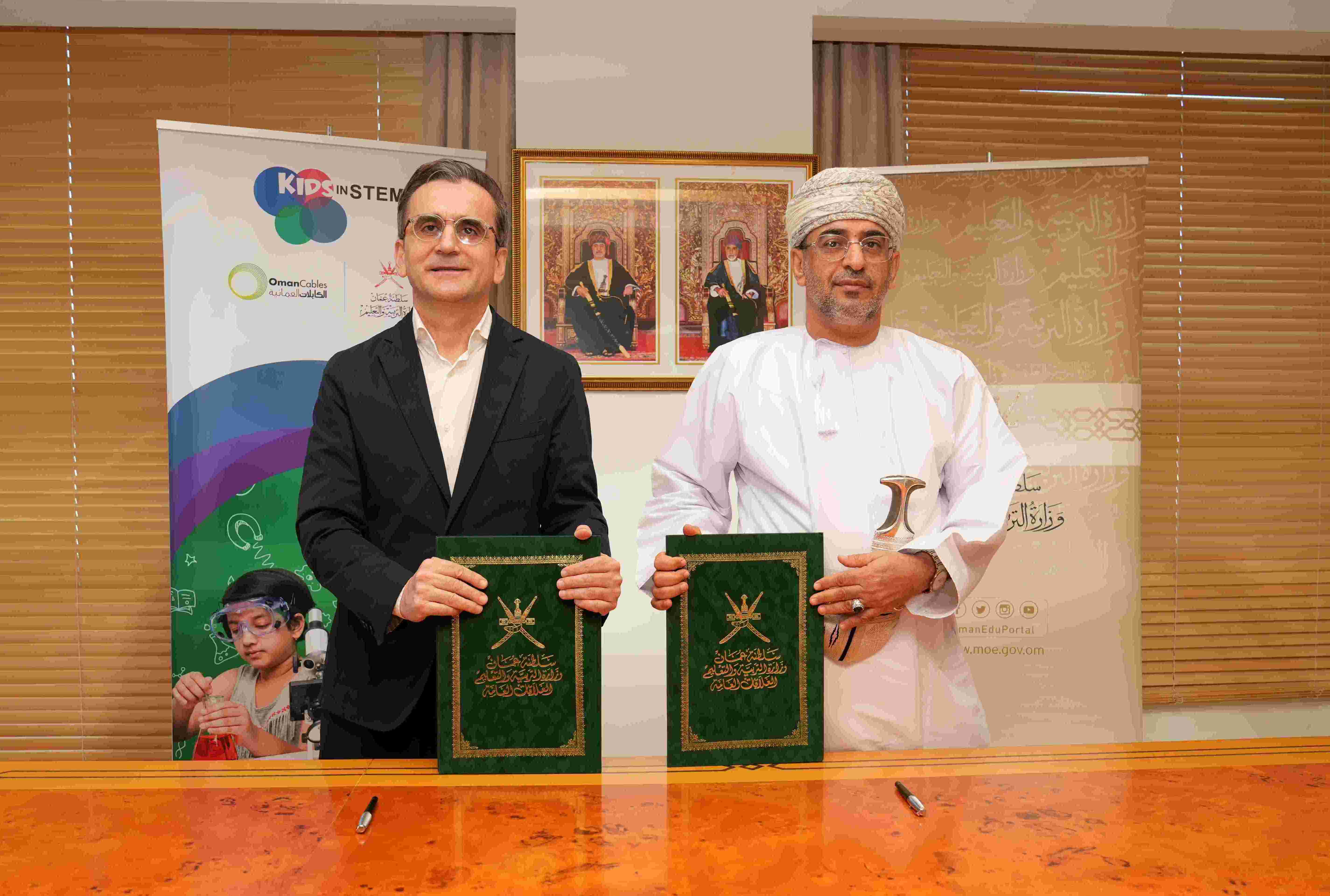
Expanding Impact on Young Learners in Oman
Oman Cables Industry SAOG, the Sultanate’s leading cable manufacturer and solution provider, h...

Dubai set to Empower Next Generation Family Businesses
The Dubai Centre for Family Businesses, which operates under the umbrella of Dubai Chambers, has lau...

DCT Abu Dhabi Celebrates Second Al Midhyaf Programme Completion
The Department of Culture and Tourism – Abu Dhabi (DCT Abu Dhabi) hosted its second Al Midhyaf...

DEWA launches Metaverse and Digital Twin Hackathon
Dubai Electricity and Water Authority (DEWA) has organised a Metaverse and Digital Twin Hackathon, i...

Symbiosis University UAE Marks Its First Anniversary
Symbiosis Dubai, the first Indian university in the UAE to launch with full program accreditation by...

‘Jahiz’, the UAE’s Latest Digital Platform
The UAE government launched “Jahiz”, an upskilling initiative for the future of government t...

EtonHouse International School expands to Saudi Arabia
EtonHouse International Education Group, a leading international education group headquartered in Si...
