 EN
EN AR
AR HI
HI ES
ES FR
FR DE
DE

Shaping the Future of Work
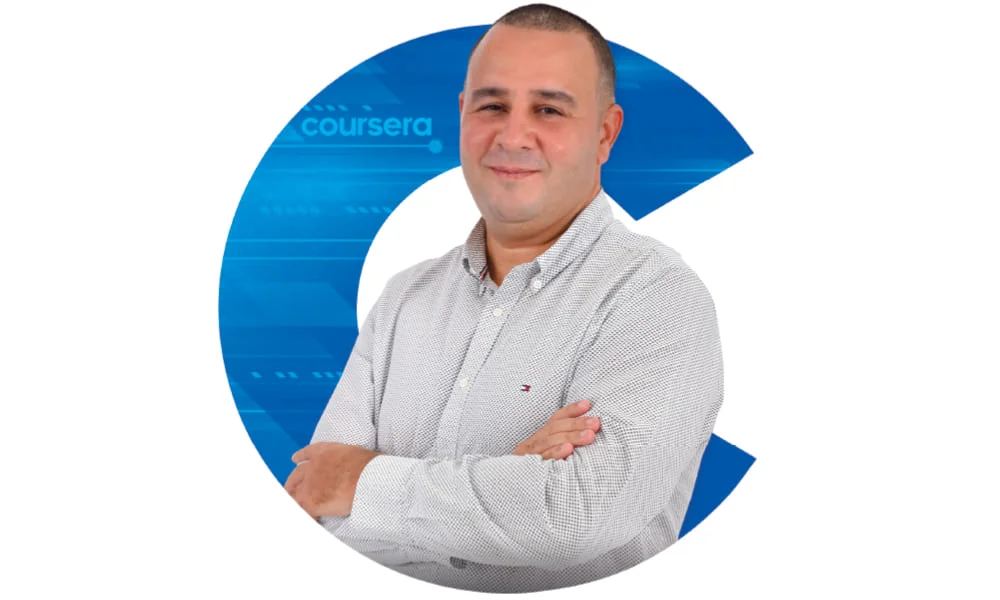
How HR Can Lead in the Age of AI by By Kais Zribi, Coursera’s GM MENA
- By 2030, 70% of the skills used in most jobs are expected to change, even for people who remain in the same role. In the UAE, 72% of organizations cited skill gaps as a major barrier, which is above the global average.
- According to Coursera's Global Skills Report 2025, year-on-year GenAI enrollments spiked 344% in the UAE, 194% in Qatar, and 165% in Saudi Arabia.
Artificial Intelligence (AI) and Generative AI (GenAI) are reshaping the global workforce, accelerating the shift to a skills-based labor market. Studies indicate that by 2030, 70% of the skills used in most jobs will change, even for individuals remaining in the same role. As organizations adapt to keep pace, HR and learning and development (L&D) professionals are at the forefront of addressing the growing mismatch between existing workforce competencies and future job requirements.
Strategic investments in targeted education and retraining initiatives are critical to cultivate a balanced skills profile within the workforce. These efforts must integrate the technical proficiencies necessary for advanced cognitive tasks with the soft or human-centric capabilities essential for effective collaboration and leadership. Such human capital investments are particularly urgent in the MENA region, given its bold strides toward AI-driven transformation and alignment with ambitious growth visions, including We the UAE 2031 and Saudi Arabia’s Vision 2030.
The region’s extensive investments in AI and technology underscore a strong and growing demand for digital upskilling. More than 40% of MENA learners have earned at least one micro-credential, among the highest globally, and year-on-year GenAI enrollments spiked 344% in the UAE, 194% in Qatar, and 165% in Saudi Arabia, according to Coursera’s Global Skills Report 2025. However, despite these advances, significant skill gaps persist. In the UAE, 72% of organizations cited skill gaps as a major barrier, above global averages, while Qatar faces an acute shortage of AI and tech talent.
To close these gaps, HR leaders must embrace a dynamic, skills-first approach, making continuous employee upskilling a business imperative. Holistic talent strategies and agile learning models that prioritize skills development can better support evolving industry demands. Leveraging online platforms to deliver scalable, relevant learning creates more robust talent pipelines and facilitates equitable access to opportunities.
For businesses and employees alike, integrating such platforms yields tangible benefits. Organizations, for instance, have reported a 327% return on investment from deploying Coursera for Business. This is attributed to the ease of access to high-quality courses and globally recognized certifications from leading companies and top universities. A total of $4.85 million in net present value (NPV) was attained over three years, driven by a range of benefits such as time savings using prebuilt Coursera courses and productivity gains from building specific advanced skills.
Fostering a culture of lifelong learning also highlights the need for companies to invest in developing their HR teams. HR technology skills are among the fastest-growing business skills, crucial for navigating the future of work. By leveraging AI and big data or using AI chatbots, HR professionals can effectively measure employee engagement, predict attrition, optimize workforce planning, and prepare for emerging talent-focused roles. Real-time people analytics further empower HR to influence broader business strategy through more informed workforce decisions.
As AI and GenAI transform learning priorities, concerns about their ethical usage, inherent bias, and risk exposure pose yet another challenge for HR professionals. Employee trust and organizational reputation are key drivers of talent attraction and retention, and HR must champion ethical AI use to ensure these technologies are used responsibly. Establishing clear guidelines and policies and providing training around responsible AI in the workplace will be essential to protect sensitive data, ensure compliance, and build trust across the workforce.
HR’s role in empowering a multi-generational workforce to adapt to future disruptions cannot be overstated. Embedding learning into daily workflows and democratizing access to technical, human, and ethical skills development will support employees with growth pathways in agile work environments. At the same time, adopting an empathetic approach to the employee experience is equally important. Prioritizing well-being and cultivating an inclusive culture will help build a more valued, resilient, and connected workforce.
Today, HR has transitioned from a supporting function to a strategic driver of organizational success. By investing in their own capabilities and those of the employees, HR professionals in MENA are proactively shaping the future of work, strengthening both the region’s global competitiveness and its long-term prosperity.
Related Posts
Thales Launches Early Careers Program for Emirati Talents
Thales, a global leader in high technology solutions for aerospace, defence, digital identity and se...
Abu Dhabi Government to Participate at GITEX Global 2025
The Department of Government Enablement (DGE) will lead Abu Dhabi Government’s showcase at GIT...

6 Ways Microlearning Can Benefit Your Organization
Microlearning is becoming a popular alternative to traditional learning methods and many organizatio...

Spotlight on Michael Watkins building Aurem – Pioneering the UAE’s workplace benefits
Michael,the international workforce of the UAE has challenges with savings, and 90% of expats are le...

IFS Appoints Mihita Podobnik as Chief People Officer
IFS, the leading provider of Industrial AI software, today announced the appointment of Mihita Podob...

Gartner Says Leaders Must Create Four Scenarios for Human-AI Collaboration at Work
The pervasive use of AI is forcing business and IT leaders to rethink their workforce. Exe...

SAP Rolls Out Technology Training Initiatives Across the Middle East
SAP University Alliances has launched its Business AI Roadshow in the UAE as the latest in a series ...

MBZUAI Unveils First-of-Its-Kind Undergraduate Programme in Artificial Intelligence
The Mohamed bin Zayed University of Artificial Intelligence (MBZUAI) is disrupting the AI education ...

Enthral.ai Unveils Agentic AI-based Role-Ready Solution
To empower HR and L&D leaders to build a skilled workforce ready to deliver from day one, Enthra...

Deel Simplifies Global HR with New Full-Stack Platform
Deel, the global HR company, today announced the launch of Deel HR, US Payroll, and Deel Engage, mak...
