 EN
EN AR
AR HI
HI ES
ES FR
FR DE
DE


Beyond Authority: The Next Evolution of Leadership in the Gulf and Middle East
John Kairouz & Marie-Louise Adlercreutz Talk Leadership into 2026 and beyond
Leadership in the Gulf and Middle East carries a unique level of complexity. In the UAE alone, expatriates make up close to 90% of the population, representing more than 150 nationalities. Every organization becomes a meeting point of different expectations, communication styles, cultural habits, and interpretations of hierarchy. Leaders here are expected to move fast, perform at global standards, and maintain harmony across a deeply diverse workforce.
In our leadership and executive coaching work across the region, one theme consistently appears: leaders who care deeply about their people and results, but feel frustrated by the gap between what they expect from their teams and what they actually see. They want ownership, initiative, and strategic thinking — yet they find themselves receiving escalations, delays, hesitation, or reactive behavior.
This frustration is rarely about capability. Most employees have the potential to perform at high levels. The real challenge often sits inside the inner world of the leader. When pressure increases — deadlines, risks, stakeholder demands, cultural expectations — leaders unintentionally shift into a mental state designed for protection rather than performance.
Neuroscience offers a simple explanation. When stress rises, the limbic system, the brain’s emotional center, becomes more active. This is the part of the brain responsible for scanning for threats and protecting us. At the same time, the prefrontal cortex — the area responsible for logic, decision-making, empathy, and creative thinking — becomes harder to access. When this happens, leaders become more reactive, more controlling, and more focused on avoiding mistakes than enabling growth.
Teams feel this shift immediately. They become cautious instead of creative. They wait instead of act. They focus on protecting themselves rather than solving problems. The psychological space to think shrinks, and performance drops not because of lack of talent, but because of reduced psychological safety.
Imagine a leader who is respected and experienced, yet under pressure begins to tighten control. He steps in, rescues decisions, and takes on more than he should. His intention is efficiency, but the outcome is dependency. His exhaustion increases, his team’s confidence decreases, and the cycle continues.
The next evolution of leadership in this region is not about abandoning hierarchy. It’s about transforming authority from protection to presence. Presence means the leader stays grounded even when pressure rises. It means their emotional system is regulated enough for the prefrontal cortex to stay online — allowing clarity, empathy, and strategic thinking to guide decisions instead of fear.
Here are a few questions that invite reflection:
- When I’m under pressure, do I lead from clarity or from tension?
- Do my people hesitate because they lack skill, or because they don’t want to disappoint me?
- What does my presence signal: openness or urgency?
Empowerment is not something leaders give verbally. It’s something people feel internally. And they feel it when authority is paired with emotional presence. When leaders operate from this space, teams move with ownership rather than permission.
This is the shift that will define the next generation of leadership in the Gulf and Middle East: authority with presence, empowerment with clarity, and performance built on psychological safety.
Related Posts

Top 9 Reasons Training Fails & Their Fixes
Simply put, training, in a vacuum, fails. There has to be more to it than attending an event, as it ...
GCC Companies Achieve 30-Second Payroll Processing With 100 Per Cent Accuracy Reveals GreytHR
Companies across the GCC region have experienced higher workforce management efficiency using advanc...
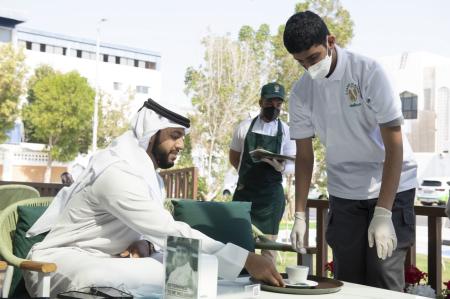
ADEK launches new training pathway in hospitality sector at AKTI to enhance workplace inclusion avenues for students of determination
The Abu Dhabi Department of Education and Knowledge (ADEK) has launched a new hospitality training p...

The ME HR & Learning 2025 Awards - Are You On The List?
We’re proud to announce the winners of the ME HR & Learning 2025 Awards, recognising ...


Mid-Day Break to Come Into Force from Wednesday
The Ministry of Human Resources and Emiratisation is implementing the Mid-Day Break for the 18th con...

Changing Your Energy by Changing a Thought
Changing Your Energy by Changing a Thought You experience and create all kinds of different energies...

The Recruiters Presents: Pakistan Sourcing Summit on January 13th, 2022
Karachi, November 2022: The Recruiters, a leading recruitment, payroll outsourcing and training con...

The University of Manchester, Dubai, Champions Women’s Leadership at Middle East Women’s Summit, Riyadh
The University of Manchester – Dubai, participated in the Forbes Middle East Women&r...
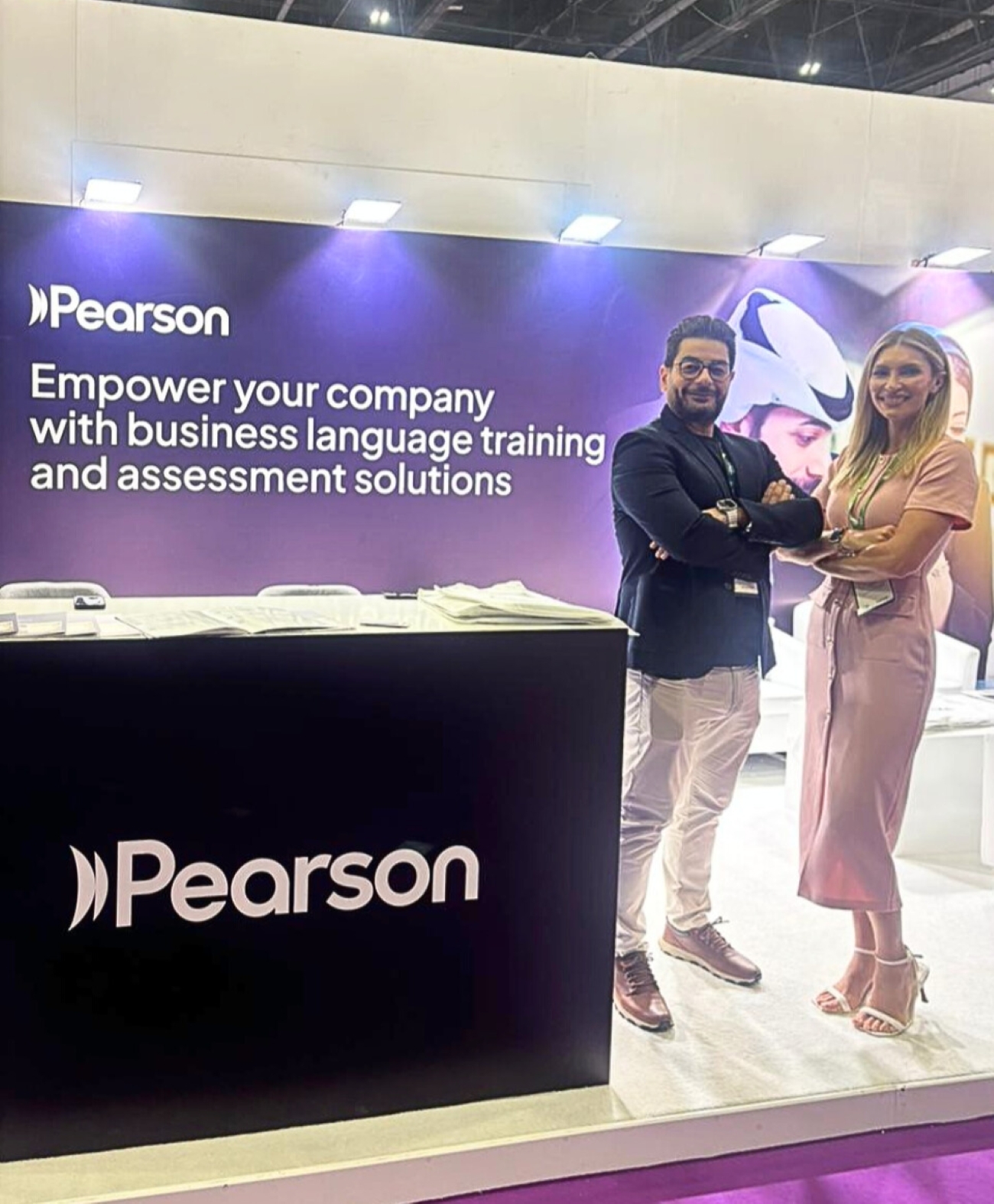
Pearson Showcases Enterprise Learning Innovation at HRSE and GovHR Summit
Pearson (FTSE: PSON.L), the world’s lifelong learning company, showcased its latest AI-po...
